
Integrated use of organic and inorganic fertilizers for forage barley production in Northeastern Alberta
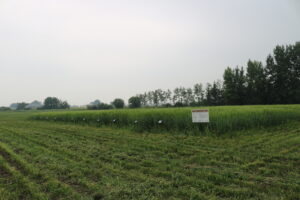
Barley (Hordeum vulgare L.) is one of the most widely grown annual forage crops in Alberta and has better feed quality than oats, wheat, or triticale. Given its major role in cattle feed, producers rely heavily on intensive applications of synthetic fertilizers to increase barley yield and quality. Consequently, the cost of synthetic fertilizers constitutes a large proportion of the total variable cost of forage barley production in Alberta. Moreover, the overuse of synthetic or chemical inputs can pose a serious threat to environmental quality. In addition, injudicious application of synthetic fertilizers does not guarantee long-term productivity on many soils due to rapid soil quality degradation, highlighting the need for more sustainable alternatives.
Compared with inorganic fertilizers, organic fertilizers contribute to a more sustainable improvement in soil fertility; however, nutrients derived from organic sources may not be as readily available to plants. In this context, the combined use of organic and inorganic nutrient sources could be a feasible approach to improving and maintaining soil fertility compared to the use of either source alone. Partial substitution of inorganic fertilizers with organic nutrient sources may also help producers reduce the cost of forage barley production in Alberta. Numerous experimental studies from different regions of the world have shown that replacing up to 50% of inorganic fertilizers with organic amendments such as cattle manure, poultry manure, biochar, and compost can enhance crop yield and quality.
However, no in-depth study has examined the effects of this integrated nutrient management practice on forage barley production in northeastern Alberta. Therefore, the proposed study was conducted to fill this knowledge gap.
Click here to view full report from our 2025 Annual Report
Click here to view full report from our 2024 Annual Report
