

Copper enrichment in fodder wheat, barley and oats – An option to improve cattle productivity
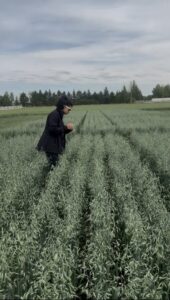
Many cattle consuming locally produced forages are susceptible to copper (Cu) deficiency in Alberta. A significant challenge for livestock producers in several parts of the province, including the Lakeland region, is that Cu concentrations in both soils and locally produced forages (e.g., hay and silage) are too low to meet animal health and performance targets. Cows experiencing insufficient Cu supply have low conception rates and often suffer weight loss unless Cu supplementation is provided.
Under average conditions, beef cattle require a daily intake of approximately 10 mg kg⁻¹ Cu in ration dry matter. However, if cattle are exposed to high levels of sulfates in drinking water, this requirement increases to 20–25 ppm (BCRC, 2017). Cu supplementation via injections or free-choice mineral kits can help correct deficiencies in cattle but may not be sufficient when animals are fed Cu-deficient forages grown on soils with low Cu levels.
Therefore, it is important to note that the Cu content of forage crops grown in the Lakeland region of Alberta is generally below the established levels required for cattle production, although molybdenum (Mo) levels are very low (data retrieved from feed analysis reports of MD of Bonnyville,
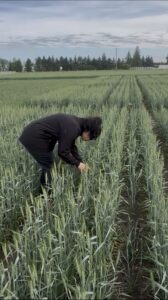
County of St. Paul, and Smoky Lake County). In this context, there is a critical need to increase the Cu content of locally grown forages, particularly wheat (Triticum aestivum L.), barley (Hordeum vulgare L.), and oats (Avena sativa L.), which are the most susceptible to Cu deficiency.
Enhancing the Cu content of forage crops through foliar-applied Cu amendments presents a promising and cost-effective approach to improving cattle health and productivity. However, this technique has not been widely adopted in the region due to limited technical information on foliar Cu fertilization of forage crops. Consequently, a field investigation was conducted at the LARA Research Farm during the 2025 growing season to assess the response of fodder wheat, barley, and oats grown on grey-wooded soil to varying levels of foliar Cu fertilizer.
Click here to view full report from our 2025 Annual Report
