

Improving relative forage quality during stubble grazing with low-growing clovers as relay crops
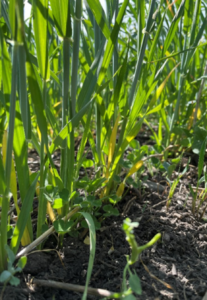
Stubble grazing is currently a widespread practice in central Alberta, which enables livestock producers to make use of alternative forage resources (i.e. cereal crop stubble) in the fall and prior to winter feeding practices (corn, swath, or bale grazing). Most stubble grazing scenarios involve cattle feeding on a mixture of straw, chaff, grains (left over from combine), and weeds. As such, the quality of the feed can vary considerably. In general, straw and chaff contain low amounts of protein, energy, calcium and magnesium. Additionally, most stubble grazing scenarios occur prior to weaning, where cows still have high energy and protein requirements as they are still lactating. Thus, there is a need to improve forage quality in this timeframe.
This project aims to introduce white clover, subterranean clover as a relay crop in feed barley. The study will consider a few factors that will promote successful outcomes. The first factor will be to investigate the impact of clover species on weed suppression (at both harvest timings). The second factor will be to investigate the impact of clover species on soil available nitrogen to the following crop. The study will measure if there are significant int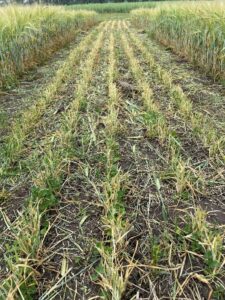 eractions between such factors (clover species, soil available nitrogen, and harvest timing).
Click here to view full report from our 2025 Annual Report
